
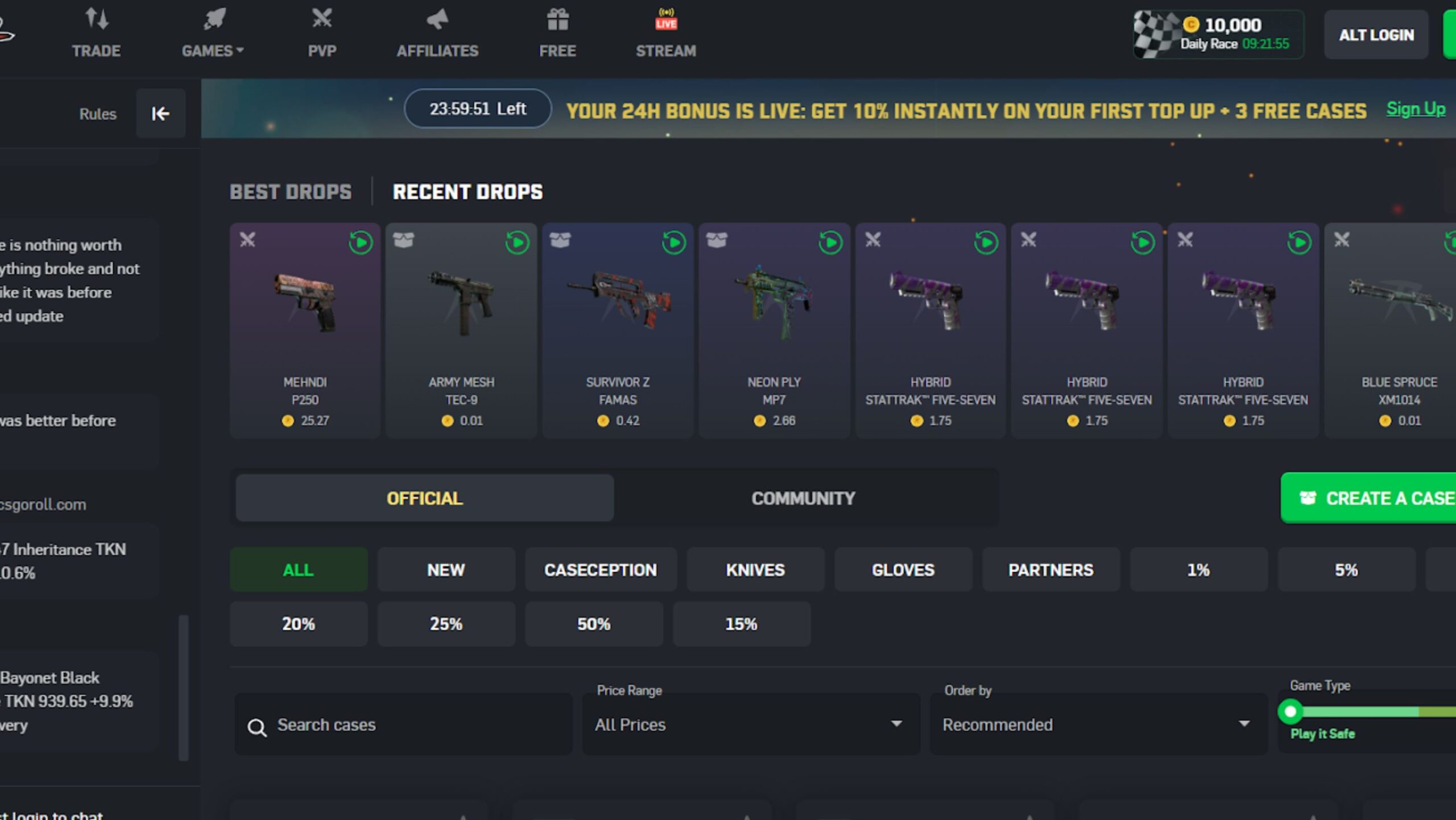
A lot of people treat a CSGORoll referral code as something you either paste everywhere or forget about entirely. They’ll drop it in a bio, maybe in a Discord profile, and then check once in a while to see if anything happened. Sometimes it works, usually it doesn’t, and most give up thinking the system is random or only useful for big creators.
In reality, referral systems like this behave much more like a small business than a lottery ticket. What you earn depends on who signs up, why they signed up, and what they do after that. Two people who approach this in different ways can end up with completely different results even if they start with the same audience size. The difference is almost always in understanding the mechanics and being deliberate about distribution and expectations.
If you look at it that way, maximizing rewards is not about chasing traffic. It’s about building a stream of users who actually use the platform and keep using it. That takes more thought, but it also scales much better over time.
Understanding How the CSGORoll Referral System Pays You
Before you try to optimize anything, you need a clear picture of what the system actually rewards. CSGORoll’s referral model, like most in this space, is built around activity rather than simple sign-ups. Creating an account through your code is only the first step, and from a financial point of view it’s the least important one.
What matters is whether that user deposits, plays, and keeps coming back. The platform shares part of the revenue generated by that activity with you. That means your income is tied to real behavior over weeks and months, not to a spike of registrations in a single day. In practice, this pushes you toward thinking in terms of retention and user quality instead of volume.
This also changes how you should evaluate your own results. A week with fewer sign-ups can still be a good week if the people who joined actually became active players. On the other hand, a big burst of low-quality traffic can look impressive in numbers and still produce almost nothing in returns. The system is designed to filter for long-term engagement, whether you intend it to or not.
Another important detail is that referral tracking is persistent. Once someone joins through your code, their activity remains linked to you. That means every active referral becomes a small, ongoing revenue source rather than a one-time event. Over time, this turns your referral base into something like a portfolio where steady, reliable users matter much more than short-lived spikes.
How Rakeback, Commissions, and Tracking Actually Work
At a basic level, CSGORoll’s referral system is built around revenue sharing rather than simple bounties for sign-ups. You are not being paid because someone created an account. You are being paid because that account generates activity that produces fees or house edge for the platform. A percentage of that value is then passed back to you in the form of commissions, rakeback-linked rewards, or a similar revenue share mechanism.
This distinction matters because it explains why some referral strategies scale and others stall out. A user who plays regularly, explores different games, and stays active over time creates a long, stable stream of value. A user who signs up, claims a bonus, and leaves creates almost none. The system is designed so that your rewards rise and fall with real usage, not with surface-level metrics like clicks or registrations.
Rakeback-style mechanics reinforce this behavior-driven model. Instead of concentrating rewards at the start, they spread them across the user’s entire lifecycle. Every wager, every session, and every return visit contributes a small amount to the total value generated. This makes income more predictable over time, but it also means there are no shortcuts. Sustainable rewards come from sustainable activity.
Tracking is the piece that ties everything together. When someone joins through your code, their account is permanently linked to you as the referrer. That link is what allows the platform to attribute revenue, calculate your share, and pay it out over time. Without this persistent tracking, the entire system would collapse into one-time bonuses and guesswork. With it, the platform can treat referrals as long-term relationships rather than disposable leads.
Several practical consequences follow from this structure:
- Sign-ups without deposits or play have almost no financial value
- A small number of active users can outperform a large number of inactive ones
- Income is tied to long-term behavior rather than short-term spikes
- Retention has a bigger impact than raw traffic volume
- Consistency of play matters more than the size of the first deposit
- Trust and expectation-setting influence earnings indirectly but strongly
This is where player motivation becomes critical. Someone who signs up because they actually want to use CSGORoll tends to move differently through the platform. They learn how things work, try different features, and build habits. Their activity might not be explosive, but it is steady, and that steadiness is exactly what the referral system rewards.
By contrast, someone who signs up only to test a bonus is usually gone as soon as that initial curiosity is satisfied. They might place a few small bets, or sometimes none at all, and then disappear. From a referral perspective, this kind of user looks good in surface statistics and bad in everything that actually pays.
Strategically, this flips the usual marketing instinct on its head. The goal is not to maximize clicks. The goal is to maximize alignment between the platform and the people you bring in. When your audience actually matches what CSGORoll offers, behavior takes care of itself: people stay longer, play more naturally, and generate value without being pushed.
When that alignment is missing, you end up fighting the system. You can drive traffic, but the numbers never seem to add up. When it’s right, the math starts working in your favor, and rewards become the result of structure and fit rather than constant effort and promotion.
Choosing the Right Places and Formats to Share Your Code
Distribution is where most people either win or waste their time. A referral code does not perform the same way everywhere, because people don’t browse the internet with the same mindset in every place. Someone watching a video about CSGORoll is already halfway interested. Someone scrolling a random social feed usually isn’t.
The biggest mistake is treating exposure as the goal. Exposure only matters if it reaches people who are in a position to care. A smaller audience with the right intent will almost always outperform a bigger audience that’s just passing by. This is why placement and context beat volume over the long run.
Think in terms of moments, not platforms. When is someone most likely to consider signing up? Usually when they are learning, comparing, or watching someone actually use the platform. That’s why guides, tutorials, streams, and explanation videos tend to convert better than standalone promo posts. They catch people at the exact point where a referral link makes sense.
Platforms, Content Types, and Audience Fit
Where and how you share your CSGORoll referral code has a bigger impact on results than how often you share it. Different platforms attract people in different mindsets, and those mindsets directly shape whether someone just clicks a link or actually becomes an active user. Treating all exposure as equal is one of the fastest ways to waste time and attention.
Longer-form content tends to filter your audience before they ever reach the sign-up page. A person who watches ten minutes of you using the platform, explaining features, or walking through how things work has already invested attention and made a small decision to care. By the time they see your referral link, they are not acting on impulse. They already have context, expectations, and a rough idea of what they are signing up for. That usually leads to better first deposits, more experimentation with features, and a much higher chance that they come back later.
Short-form or drive-by placements work in the opposite way. They catch people who are scrolling, bored, or only half-paying attention. Some of them will click. A few might even sign up. But because there was no real context or intent behind that action, most of that traffic burns out quickly. The referral system does not reward curiosity. It rewards commitment, and commitment almost always comes from understanding.
Community spaces add another layer that pure content platforms don’t have: social context. In Discord servers, forums, or small groups, people don’t just see your link, they see you. If you’re active, helpful, and clearly there for more than self-promotion, your referral code feels like a personal recommendation. That changes how people approach the platform and how seriously they take your suggestion. Over time, that difference shows up very clearly in retention and activity levels.
On the other end of the spectrum is indiscriminate distribution. Posting your code in unrelated comments, random groups, or places where nobody is actually looking for this kind of service usually produces empty numbers. You might see clicks. You might even see sign-ups. But almost none of that traffic turns into real, long-term users, which means it doesn’t compound and it doesn’t scale. Some consistent patterns show up when you look at performance across different channels:
- High-intent audiences outperform large but unfocused ones
- Contextual mentions convert better than standalone promotions
- Trust-based environments produce better long-term users
- Educational or demonstrative content increases retention
- Random placements generate noise more often than value
- Smaller, relevant platforms often beat bigger, generic ones
Turning Referrals into Long-Term, High-Value Users
This is the part most people skip, and it’s usually the reason their results stay small. The real leverage is not in getting someone to sign up. It’s in getting them to stay. Retention multiplies everything else you do, because one good user keeps paying off over time without you having to find them again.
The fastest way to kill retention is to oversell. If someone joins expecting something unrealistic, they’ll leave as soon as reality doesn’t match the promise. The fastest way to improve retention is to set clear, honest expectations. People who know what the platform offers, what bonuses actually do, and what the risks are tend to make calmer, more sustainable decisions.
You don’t need to write a legal disclaimer or a lecture. Even small signals of honesty matter: explaining what you personally use, what you like, what you avoid, and what kind of player the platform is actually good for. That filters out the wrong audience and keeps the right one.
Why Retention and Trust Matter More Than Raw Sign-Ups
If you look at referral systems only through the lens of sign-up numbers, it’s easy to chase the wrong goal. Big spikes of registrations feel productive, but in a system built around activity and revenue share, they often mean very little. What actually moves the needle is what happens after the account is created: whether the user deposits, whether they come back, and whether they turn the platform into a habit rather than a one-time experiment.
From a financial perspective, the difference is dramatic. One user who plays regularly over several months can generate more value than dozens of people who signed up, placed a few small bets, and disappeared. The math behind rakeback and commissions rewards time and consistency. It punishes churn. That’s not a moral statement, it’s just how the model is designed to work.
Trust is the multiplier that makes retention possible. People don’t stick around on a platform just because a bonus looked good in a post. They stay because the experience more or less matches what they were led to expect. When your recommendations are accurate, when you don’t oversell, and when you’re clear about what the platform is actually good for, users feel less friction and less disappointment. That lowers the chance of quick drop-off and increases the chance of steady, long-term use.
Trust also works in a quieter, longer cycle. Someone who had a good experience after joining through your code is more likely to use your links again in the future, to follow your content, or to mention you to friends. Someone who feels misled usually doesn’t complain. They just leave and never come back. You rarely see that damage in your stats, but you definitely feel it in your results over time.
As your base of satisfied, active referrals grows, a compounding effect starts to show up. You are no longer relying only on your own distribution. Some users bring others. Some talk about their experience in their own circles. Some become repeat users across multiple platforms or content pieces you publish. This is slow and it’s not flashy, but it’s stable and very difficult to fake with tactics or shortcuts. Several long-term patterns tend to emerge when retention and trust are treated as priorities:
Results become easier to forecast and plan around
A smaller audience can outperform a much larger but less engaged one
Revenue becomes smoother and more predictable over time
Marketing effort shifts from chasing traffic to supporting users
Drop-off rates matter more than click-through rates
Reputation starts to compound instead of resetting with every post

