
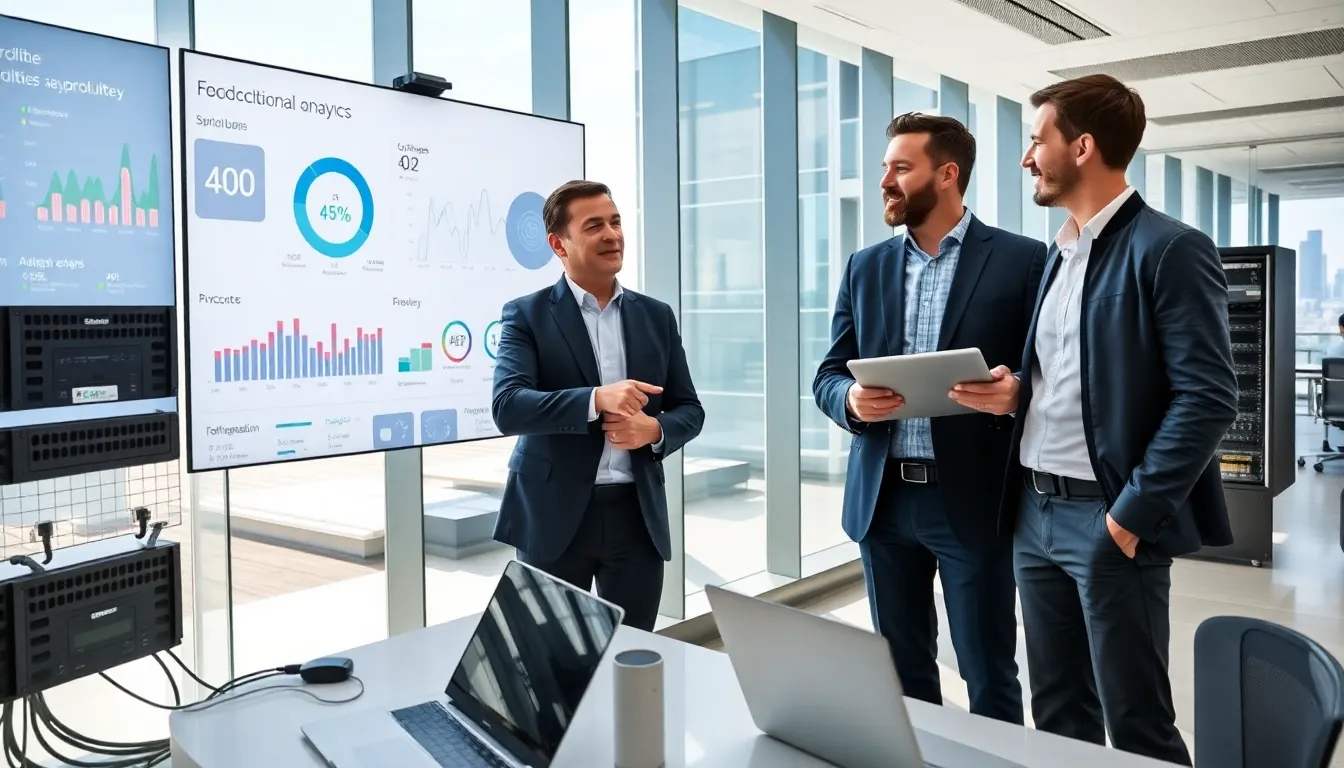
T‑Mobile smart building tech helps building teams run systems more efficiently. It connects sensors, networks, and software to deliver data and control. The platform collects data, analyzes it, and sends actions to devices.
Key Takeaways
- T‑Mobile smart building tech links sensors, gateways, and cloud software to collect, analyze, and act on data for energy, occupancy, air quality, and equipment status.
- Owners and operators reduce waste, improve occupant comfort, and speed maintenance response by using dashboards, alerts, and automated controls.
- Plan deployments in phases: map network and device needs, test integrations, and train staff to lower risk and measure ROI.
- Enforce strong device, network, and data controls with logging and access management to meet security, privacy, and compliance requirements.
- Evaluate solutions on coverage, device support, integration options, SLAs, and upgrade paths, and run pilots to verify measurable savings and future AI/network readiness.
What T‑Mobile Smart Building Tech Is And How It Works
T‑Mobile smart building tech describes a set of tools that link building systems to cellular and local networks. The solution uses sensors, gateways, cloud services, and management software. It gathers data on energy, occupancy, air quality, and equipment status. The system processes data at the edge and in the cloud. It then sends alerts, controls devices, or creates reports. Facility teams use dashboards and APIs to view and act on the data. IT teams use network and security controls to manage access and compliance. Integrators connect existing HVAC, lighting, and access control systems to the platform. The platform reduces manual checks and speeds up responses to issues.
Key Components Of A T‑Mobile Smart Building Solution
A smart building solution includes several core parts that work together. Each part provides clear functions for data collection, transport, processing, and control.
Benefits For Building Owners, Occupants, And Operators
Owners, occupants, and operators gain measurable improvements from smart building tech. The platform reduces waste, improves comfort, and speeds maintenance.
Practical Use Cases And Industry Applications
T‑Mobile smart building tech fits multiple sectors. Each sector needs specific sensors, controls, and workflows. The platform adapts to those needs with configurable rules and integrations.
Deployment Considerations And Best Practices
Deployers should plan network, devices, and change management before installation. They should test integrations and train staff during rollout. Clear phases reduce risk and allow measured ROI.
Security, Privacy, And Compliance
Security and privacy matter for any building deployment. Teams must design controls for data, devices, and networks. The platform should provide clear logs and access management features.
Future Trends And Roadmap For Smart Buildings
The smart building field will see faster networks and smarter local compute. Vendors will add more automated tools and system integrations. Teams should plan for incremental upgrades.
What To Look For When Evaluating T‑Mobile Smart Building Solutions
Buyers should evaluate coverage, device support, and integration options. They should check security features, SLAs, and support channels. They should test pilots and verify measurable savings. The chosen vendor should show clear upgrade paths and support for future network and AI features.

