Smartphone companies often advertise bigger batteries as the solution to short battery life. It makes sense at first i.e., more battery should mean your phone lasts longer. But the real problem isn’t just the size of the battery. How efficiently your phone uses that energy matters just as much.
For beginners exploring technology, the main takeaway is that software often matters more than raw battery size. Today’s gadgets do far more than make calls or send messages. They stream high-definition videos, run navigation apps, handle video conferences and control smart home devices. This becomes especially crucial for users who spend extended periods on sports betting apps, playing online casino games or gaming, where batteries can drain quickly during live events or long sessions. Efficient energy management helps devices stay powered throughout heavy use, without relying solely on bigger batteries.
Apple and Google have shown that software updates can make batteries last longer without changing the hardware. When Apple added power-saving features in iOS 15, many older iPhones stayed on standby longer. Google’s Android updates also control background apps better, reducing wasted energy. These improvements didn’t need bigger batteries; they needed smarter software.
Understanding Energy Consumption At The Software Level
Every tap, swipe and background refresh consumes processing power. The processor executes instructions, memory is accessed and data is transmitted over networks. Poorly optimized apps can request location updates too frequently, refresh data unnecessarily or keep the processor awake when it should be idle. That inefficiency drains energy quickly.
This is especially noticeable in augmented reality (AR) apps, live video streaming and mobile productivity tools. AR navigation apps, for instance, continuously process camera input and sensor data while updating directions in real time, putting a heavy load on both processor and battery. Video conferencing apps transmit high-quality audio and video while managing background tasks, which can drain devices rapidly if software isn’t efficient.
Many browser-based entertainment games can drain a device’s battery quickly, making efficient energy management from software to hardware essential. These platforms often allow users to try games without any financial commitment, testing performance and responsiveness before playing for real money. Aviator demo play, for instance, lets users experience the mechanics of the Aviator crash-style game without wagering real money. When these experiences run smoothly on mid-range devices, it is usually the result of developers optimizing animations, minimizing network requests and reducing processor load, rather than relying solely on larger batteries to compensate.
Why Optimization Outperforms Hardware Expansion
Adding a larger battery increases weight, cost and device thickness. It also does not solve wasteful background activity. Efficient software, on the other hand, reduces unnecessary CPU cycles and memory usage. This extends battery life while keeping devices slim and affordable. Samsung’s One UI updates have focused on sleep modes for unused apps.
According to Samsung’s own documentation, apps that remain unused for extended periods are automatically restricted from running in the background. This significantly reduces idle drain. Similarly, Apple’s iOS 15 introduced background activity management that optimizes energy use across system and third-party apps, helping older iPhones last longer without increasing battery size.
Instead of increasing battery size every year, manufacturers now compete on how intelligently they manage power through software controls.
The Role Of Operating Systems In Battery Life
The operating system acts as the central traffic controller. It decides when apps can access resources and when they must wait. Modern systems use adaptive battery features that learn user behavior patterns. If a user checks social media mostly in the evening, the system delays background updates during the day to save power.
Google reported that its Adaptive Battery feature in Android reduced background CPU usage for infrequently used apps by limiting their access to system resources. The effect is cumulative. Small efficiency gains repeated thousands of times per day translate into hours of additional battery life.
For instance, users streaming high-definition videos or navigating with GPS apps can enjoy longer device use, because the OS intelligently prioritizes active tasks while minimizing energy spent on background activities.
Lessons From Different Industries
The same principle applies across multiple industries, where optimizing efficiency often delivers better results than simply increasing raw capacity. In cloud computing, data centers focus on software-driven load balancing and cooling optimization to reduce energy consumption rather than just adding more servers.
In aviation, airlines improve fuel efficiency through better flight path planning, lighter materials and engine tuning instead of increasing fuel tanks on aircraft. In logistics, warehouses enhance throughput by optimizing conveyor systems, inventory algorithms and robotics rather than just expanding storage space.
Automotive engineers focus on optimizing engine efficiency, aerodynamics and electronic control units (ECUs) rather than increasing fuel capacity alone. Toyota’s hybrid systems illustrate this clearly: by refining energy management software that controls when electric motors and combustion engines engage, Toyota improves efficiency without dramatically increasing battery size in its vehicles.
In smart home technology, devices like thermostats and lighting systems extend operational time and reduce power consumption through adaptive software control instead of installing larger power supplies. This comparison helps beginners understand the broader point. Smart resource management consistently outperforms brute force expansion. In smartphones, vehicles and even industrial systems, efficiency determines endurance.
Efficiency In Network Heavy Environments
Devices today run multiple network dependent applications simultaneously. Streaming video, cloud backups and interactive services demand constant data exchange. Inefficient network polling can quickly deplete power. Optimized software reduces redundant requests and compresses data intelligently.
Streaming companies such as Netflix invest heavily in video compression algorithms. By reducing file sizes without harming visual quality, they cut data usage and lower energy demand on devices. Similar principles apply to high traffic entertainment services, including online casinos that must handle real time user interactions without draining user devices. Efficient backend design and front-end optimization reduce strain on both servers and smartphones.
Background Processing And Financial Transactions
Blockchain technology powers many modern digital platforms, enabling decentralized, real-time transaction processing across the globe. Networks such as Bitcoin, Ethereum and Solana validate and record transfers almost instantly, which demands both robust software and efficient device management to prevent slowdowns. Many platforms built on these networks focus on minimizing user verification steps to streamline onboarding. No kyc gambling sites with crypto are digital platforms that let users play casino games using cryptocurrency without requiring traditional identity checks. Success in this space relies on lean code and optimized transaction handling to ensure fast, responsive performance on mobile devices without overloading system resources.
When financial or transactional systems are poorly optimized, they can spike processor activity and consume significant battery power. Efficiency at the software layer ensures responsiveness while preserving energy.
The Environmental And Economic Argument
Software efficiency is not only about convenience. It has environmental implications. Larger batteries require more raw materials such as lithium and cobalt and mining these materials carries significant environmental costs. If better coding practices can extend battery life by even ten percent, the cumulative effect across billions of devices is substantial.
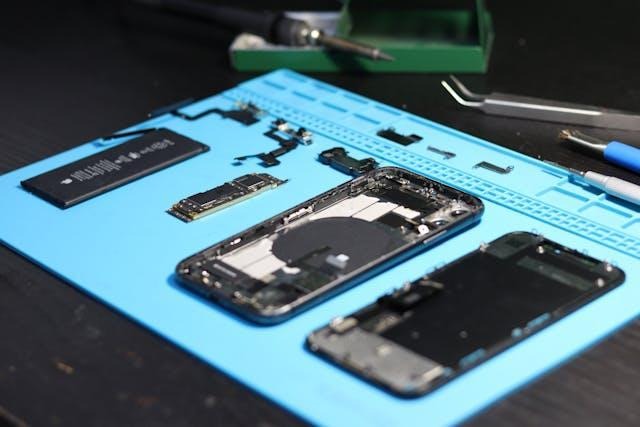
Apple has publicly emphasized reducing carbon emissions across its product lifecycle. Similarly, Microsoft has highlighted how software updates that improve energy efficiency in Surface devices help prolong battery lifespan, reducing the need for frequent hardware replacements.
Improving software longevity allows older devices to remain usable for longer periods, lowering electronic waste. Extending device lifespan through updates is often more sustainable than manufacturing new hardware with bigger batteries.
Final Thoughts
The push toward larger batteries may continue in marketing campaigns, but the real competitive advantage lies in intelligent design. Companies that refine code, manage background tasks efficiently and reduce unnecessary processing will deliver better user experiences than those that simply add hardware capacity.
Even high engagement platforms such as online casinos depend on optimized software to ensure fast loading times, stable gameplay and minimal battery drain on user devices. Near the conclusion of this shift in thinking, it becomes clear that energy efficiency is fundamentally a software challenge. Devices do not need to be heavier or bulkier. They need to be smarter.
Bigger batteries may offer short term gains, but software efficiency provides sustainable, scalable improvement. For beginners entering the tech world, understanding this distinction is crucial. The future of mobile performance will be shaped less by physical expansion and more by intelligent engineering decisions that maximize every unit of stored energy.