


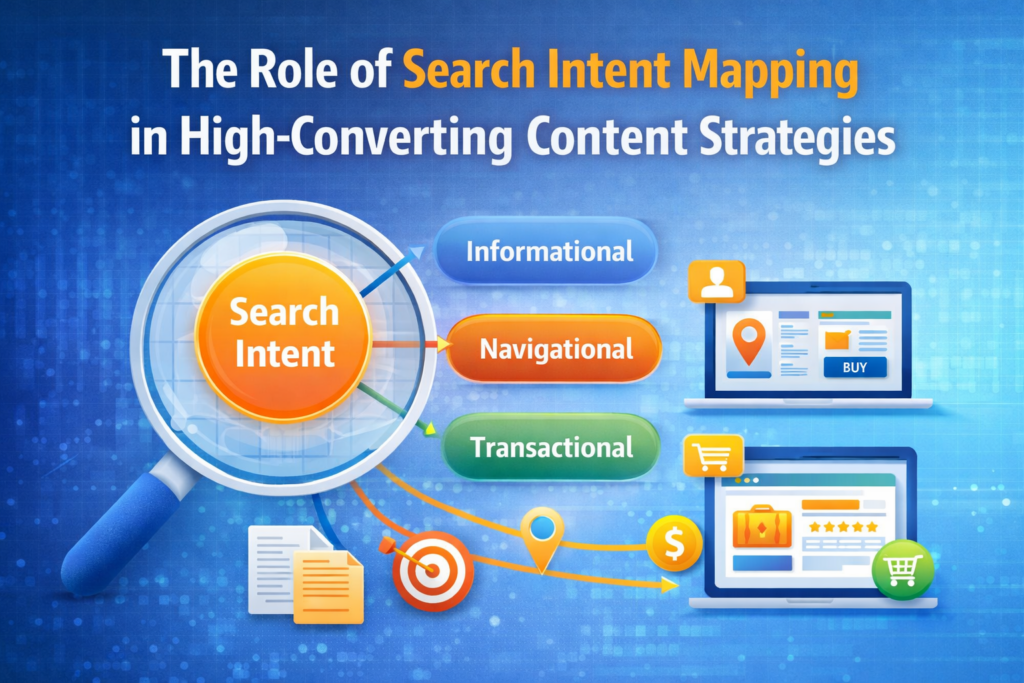
Producing content that ranks but does not convert is one of the frequent issues in digital marketing. There are numerous brands that spend time and resources on blogging, guides, and landing pages but fail to achieve high engagement or a strong return. In the majority of cases, no one is troubled by bad writing or design; it is a lack of fit between what users are searching for and what the content is offering. Search intent mapping is important herein this gap.
The search intent mapping process matches content to the intent that led a user to a search. It goes beyond keywords by targeting the reason behind the query and what the user wants. When the content aligns with the user’s intent, it will be more relevant, interesting, and helpful in driving conversions. This is the way the best experienced professionals, such as any good SEO consultant would underline because the visibility in itself is not enough to deliver any results, relevance is.
Understanding Search Intent at a Deeper Level
The four categories of search intent include informational, navigational, commercial, and transactional. Nevertheless, to map intent effectively, it is necessary to understand the user better. The same keywords may have very different objectives depending on what stage of the decision-making process the user is at.
This is where keyword intent analysis comes in. Beyond simple keyword selection based on search volume, marketers evaluate what users are trying to accomplish. Informational queries are signs of a learning state, whereas commercial ones are signs of evaluation and comparison. Using the same approach to deliver the content often leads to poor engagement when the two are treated equally.
Intent-based keyword grouping can make content more relevant and trustworthy by answering users’ needs with greater precision.
Why Search Intent Mapping Drives Higher Conversions

A large amount of traffic does not yield conversions. When users encounter content that fails to impress them, the likelihood of their acting or interacting is low. Search intent mapping reduces this friction by making every piece of content relevant to the user’s mindset when they search.
This congruency is the key to successful content funnel planning. Early-stage content must inform and generate trust, middle-funnel content should assist users in comparing and judging alternatives, and bottom-funnel content must concentrate on being clear and reassuring. When the content is properly mapped in the funnel, users can move in the direction of their movement and do not feel forced.
Using SERP Behavior to Validate Intent
SERP behavior is one of the surest methods of comprehending intent. Search engine result pages indicate how search engines interpret a user’s intent. The appearance of featured snippets, long-form articles, videos, or comparison pages indicates the form of content most likely to satisfy a query.
In case the top-ranking results are detailed guides, there is a high likelihood that a brief landing page will not perform well. Similarly, with comparison tables taking over the SERP, one is most likely comparing alternatives rather than finding simple information. The learning of SERP behavior assists marketers in deciding the content format, content depth, and content structure.
Mapping Intent Across the Content Funnel
Search intent mapping is applicable to long-term content strategies, as it aims to match content to every stage of the funnel. At the awareness phase, people need knowledge, not solutions, and therefore the content ought to be informative and non-partisan. During the consideration stage, users desire transparency, structure, and knowledge to help them decide.
At the decision stage, users want to feel safe. The information in this case must address issues and eliminate doubt, and not employ persuasion. In the consistent application of intent mapping, content is used as an interconnected system rather than individual pages.
Common Pitfalls in Intent Mapping
There is a general tendency to rely on assumptions rather than statistics. The other is inserting words into a text without regard to context, which undermines readability and credibility. Some brands also treat intent as a static feature, and user behaviour is not taken into account (as it changes over time).
Intent patterns can change with shifts in competition, technology, or consumer expectations. Keyword intent analysis and SERP behavior should be reviewed frequently to ensure that it remain relevant.
Measuring the Impact of Intent-Driven Content
Rankings should not be used as a measure of the success of search intent mapping. The engagement measures that are time on page, scroll depth, bounce rate and assisted conversions are more insightful in understanding whether the content is satisfying user needs or not.
When content and intent work together, users will extend their stays, engage more, and convert more paths with less friction. These are more favourable to sustainable growth and not temporary traffic peaks.
Conclusion
The key to high-converting content strategies is search intent mapping. Brands can design experiences that are meaningful and valuable by interpreting user intent, studying SERP behaviour, and matching content with funnel stages. With intelligent keyword intent analysis and systematic content funnel planning,