


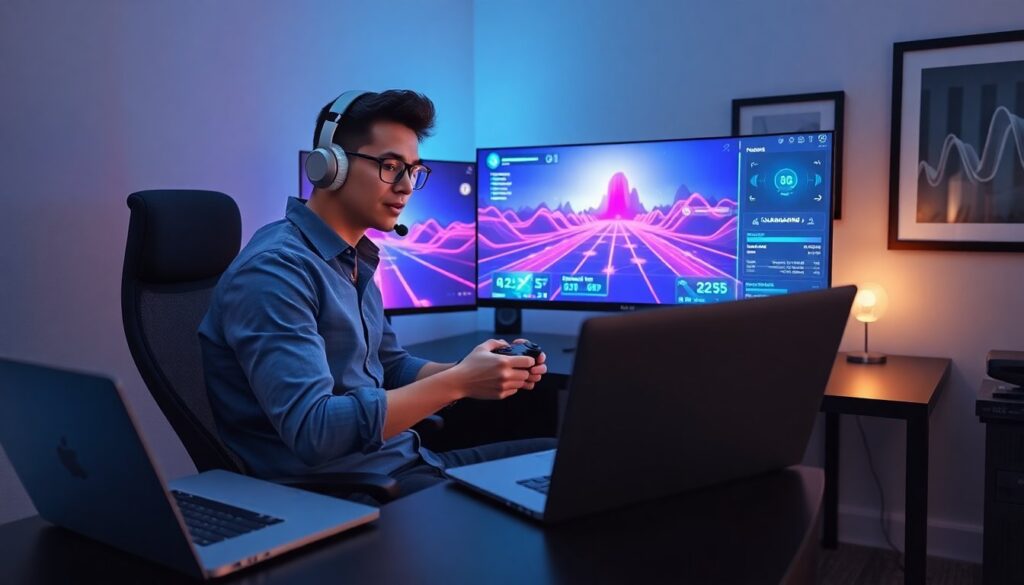
Sonic Silicinsidr Tempo Anther blends rhythm and action in a fast arcade loop. It places timing at the center of movement, combat, and score. Players hit precise beats to trigger abilities and change level flow. The game rewards timing, pattern memory, and split-second input. This piece explains what the game is, how it plays, how it looks and sounds, and how players join the scene.
Key Takeaways
- Sonic Silicinsidr Tempo Anther is a rhythm-action game that emphasizes timing to link movement, combat, and scoring in fast arcade runs.
- The Silicinsidr Reactive System tracks beat accuracy and rewards chains of precise inputs to enhance combos and damage.
- Bright visuals and an electronic soundtrack help players quickly identify hazards and beat patterns, making timing intuitive and gameplay fast-paced.
- Players can adjust input calibration for latency, enabling personalized control and helping improve performance across devices.
- A vibrant competitive scene and active mod community support diverse playstyles with custom tracks, challenges, and crossplay leaderboards.
- New players should start with tutorials and lower difficulty, practice daily, and utilize community resources to build rhythm skills effectively.
What Sonic Silicinsidr Tempo Anther Is And Why It Matters
Sonic Silicinsidr Tempo Anther is a rhythm-action game released in 2026. It uses beat-synced mechanics to connect movement and combat. The title combines short stages, score runs, and persistent upgrades. Players progress by improving beat accuracy and by unlocking tempo-linked abilities. The game matters because it changes how timing feeds both mobility and damage. It links precision input to visible level changes. That design shifts focus from raw aim to rhythmic control. Sonic Silicinsidr Tempo Anther pulls players who enjoy quick runs and high-score competition. It also attracts players who prefer pattern learning over random drops. The game runs on PC and major consoles. It supports local and online leaderboards. Reviewers praise its tight input and its layers of challenge. The title fits into the 2026 trend of hybrid systems that mix genres, and it often appears in community discussions about fresh indie mechanics.
Core Gameplay Mechanics: Tempo, Inputs, And The Silicinsidr Reactive System
Sonic Silicinsidr Tempo Anther centers on a tempo engine called the Silicinsidr Reactive System. The system tracks beat windows and assigns bonuses for chained accuracy. Players press one to four buttons in rhythm to move, dodge, and attack. Accurate inputs extend combo timers and amplify damage. Missed beats break combos and reduce movement speed briefly. The core loop asks players to read beat patterns and react within tight windows. The game layers simple inputs into emergent play. For example, a single-button tap does a dash on-beat and a slide off-beat. Players learn to re-map muscle memory to beat phrasing. The system also ties visuals to tempo. Enemies flash on predicted beats, and level hazards pulse in time. The reactive system offers clear feedback. It shows success with screen pulses, distinct sounds, and small slow-motion cues. Players can practice on difficulty modes that expand beat windows. The game offers an input calibration option that adjusts latency per controller. Communities share optimal calibration profiles for headsets and controllers. Sonic Silicinsidr Tempo Anther includes modifiers that change tempo mid-run. These modifiers require players to shift rhythm quickly. That shift rewards adaptive timing and punishes rigid play. Developers release patch notes that fine-tune beat windows and scoring. The team keeps the input feel stable while adding content.
Visual Style, Soundtrack, And Level Design Philosophy
Sonic Silicinsidr Tempo Anther uses bright, kinetic visuals that match beat timing. Levels use clear contrast so players spot hazards and beat markers quickly. The art favors bold shapes and fast read. That choice helps players process scenes in one glance. The soundtrack mixes electronic, drum-heavy tracks and melodic hooks. Each track defines a level tempo and a set of enemy rhythms. The music acts as a gameplay cue and a scoring tool. Sound design separates input cues, enemy cues, and ambient layers. That separation lets players hear the most relevant beat at every moment. Level design favors short loops with distinct threads. Designers place safe zones and high-risk score paths in each stage. Players choose risk to chase higher multiplier windows. Levels introduce one new mechanic per stage so players learn with low cognitive load. Later stages combine mechanics so players manage multiple beat patterns. The game also uses adaptive music that shifts when players hit streaks. That shift rewards accuracy with new melodic layers and brighter instrumentation. Players report that the audio feedback makes timing feel intuitive rather than forced. Sonic Silicinsidr Tempo Anther balances sight and sound to keep runs fast and readable.
Competitive Scene, Community Mods, And How To Get Started
Sonic Silicinsidr Tempo Anther has a growing competitive scene that centers on leaderboard runs and timed events. Players submit scores for daily and weekly challenges. Tournament organizers use custom rules that limit modifiers or set fixed tempos. The scene supports runs streamed on major platforms and shared in clip threads. Community modders create custom tracks, new enemy patterns, and UI tweaks. Mods range from simple beat skins to full soundtrack swaps. New players start by using the in-game tutorial and the reduced difficulty mode. They then practice on mid-level loops to build muscle memory. The developers publish a short guide that explains score multipliers and calibration. Players also benefit from community videos that show routing and rhythm tips. For players who want to compare input systems, recent sports tech coverage shows other games exploring AI-assisted officiating and timing systems, which informs how organizers run events and adopt automation in tournaments. The game supports crossplay leaderboards and offers private lobbies for practice. New players should enable input calibration, pick one controller, and play daily short runs to improve. Active mod threads and weekly challenges make the game approachable and competitive.