



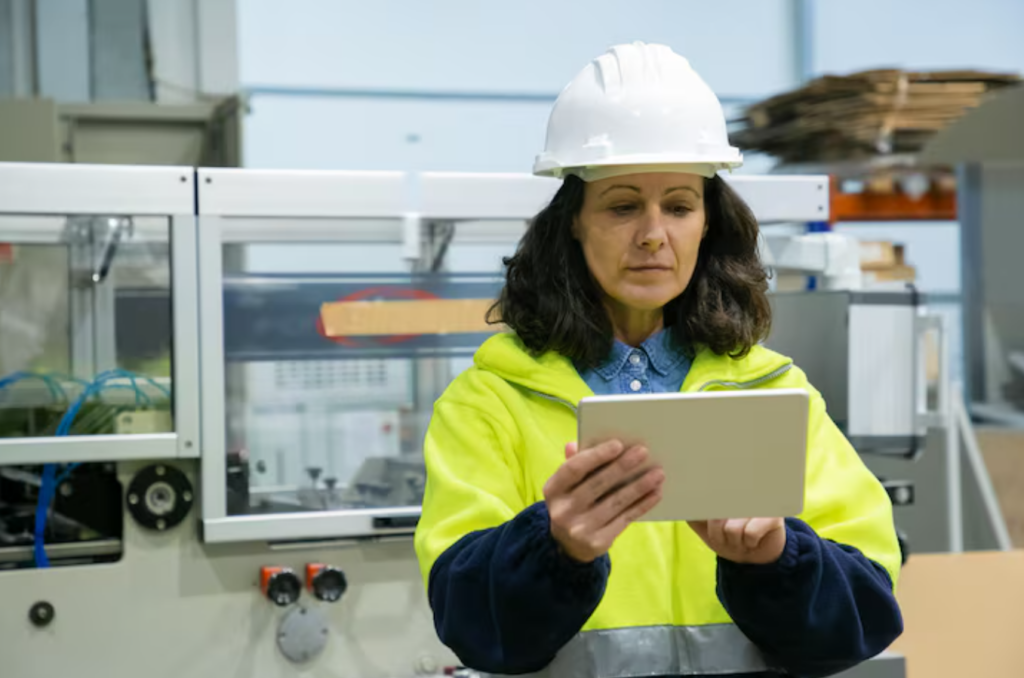
Modern manufacturing depends on much more than machinery, raw materials, and labor. As production systems become faster, more automated, and more precise, manufacturers increasingly rely on specialized resources to maintain quality, efficiency, safety, and consistency.
These resources include advanced measurement systems, specialized materials, controlled production environments, technical data, cleaning technologies, and highly trained personnel. Each supports a different part of the manufacturing process, but their value becomes greatest when they work together.
The importance of these resources is particularly evident in advanced manufacturing, where small variations in temperature, dimensions, material properties, or process conditions can affect the final product. The National Institute of Standards and Technology (NIST) notes that advanced manufacturing creates unique challenges because materials and processes can behave in complex ways during production.
Consequently, manufacturers must treat specialized resources as essential components of production rather than optional additions.
Precision Measurement and Process Control
One of the most important specialized resources in modern manufacturing is precision measurement. Manufacturing processes can only be controlled effectively when operators understand what is happening inside the process.
Traditional inspection often takes place after production. However, modern manufacturing increasingly incorporates measurement directly into machines and processes. This approach can identify deviations earlier, reducing the likelihood that defective products will continue through subsequent production stages.
NIST describes integrated metrology as an approach that extends measurement beyond finished parts to include manufacturing processes and equipment. This can support greater efficiency and productivity while also improving quality assurance.
Measurement systems can evaluate dimensions, temperature, pressure, surface characteristics, material structure, and other variables. When these measurements are connected to process information, manufacturers can make more informed adjustments.
This is particularly important for advanced processes such as additive manufacturing. NIST research highlights the need for monitoring and control because inconsistent part quality and production efficiency remain important challenges for some additive manufacturing applications.
Precision measurement therefore acts as a bridge between production activity and quality management. It provides the evidence required to determine whether a process is operating as intended.
Specialized Materials and Controlled Conditions
Materials are another critical resource. Modern products frequently require materials with specific mechanical, thermal, electrical, or chemical characteristics. Selecting an appropriate material is only the beginning. Manufacturers must also control how that material behaves during processing.
Advanced manufacturing can involve rapid heating and cooling, pressure changes, chemical reactions, or complex interactions between materials and equipment. These conditions can influence microstructure and ultimately determine product performance.
NIST emphasizes the importance of understanding material structure during manufacturing because changes at microscopic levels can affect the properties and reliability of finished components. In situ characterization can provide information about how materials evolve under actual processing conditions.
This makes specialized material analysis increasingly valuable. Instead of relying exclusively on final-product testing, manufacturers can investigate the relationship between processing conditions, material structure, and final performance.
Controlled environmental conditions are equally important. Temperature, humidity, particulate levels, ventilation, and other factors can influence sensitive manufacturing operations. Maintaining appropriate conditions helps reduce unwanted variation and creates a more predictable production environment.
Advanced Cleaning and Surface Preparation
Cleaning is often overlooked when discussing manufacturing resources, yet contamination can have a major effect on product quality. Residues, oils, particles, coatings, and other unwanted materials may interfere with assembly, finishing, inspection, or subsequent processing.
Specialized cleaning methods can address these problems while limiting damage to sensitive components. One example is dry ice blasting, which uses solid carbon dioxide particles propelled toward a surface. The U.S. Environmental Protection Agency describes the process as an industrial surface-cleaning method in which dry ice particles help remove contamination through impact and other physical effects.
An important characteristic of this approach is that the solid carbon dioxide changes directly into gas after use. This can reduce the amount of secondary blasting media left behind, although the removed contamination itself still requires appropriate handling.
The suitability of any cleaning technique depends on the material, contamination, equipment, and operating conditions. Regulatory guidance also indicates that protective measures, ventilation, and appropriate controls may be necessary for certain dry ice cleaning applications.
The broader lesson is that cleaning should be treated as a controlled manufacturing activity rather than simply a maintenance task. Surface condition can directly influence the reliability of later processes.
Data as a Specialized Manufacturing Resource
Modern factories generate enormous amounts of production information. Sensors, inspection equipment, automated machinery, and enterprise systems can all contribute data about production conditions and performance.
However, collecting information does not automatically create value. Data must be accurate, understandable, traceable, and available when decisions need to be made.
NIST identifies data infrastructure and analytics as important elements of advanced manufacturing. Its research focuses on improving data collection, interoperability, traceability, and information workflows across manufacturing operations and supply chains.
This makes data quality itself a specialized resource.
Reliable data can help manufacturers identify recurring defects, evaluate process stability, understand equipment behavior, and compare production results. It can also support predictive approaches in which potential problems are identified before they cause significant downtime.
The value of data increases further when measurement systems and production equipment can communicate effectively. Interoperability allows information from different parts of a manufacturing system to contribute to a more complete picture of production performance.
Equipment Reliability and Maintenance
Specialized resources also play an important role in maintaining production equipment. A highly capable machine cannot deliver consistent results if its components are worn, improperly calibrated, or operating outside their intended conditions.
Condition monitoring provides a way to observe equipment performance and identify developing problems. Measurements can reveal changes in vibration, temperature, alignment, pressure, or other operating characteristics.
This approach supports a shift from purely reactive maintenance toward more informed maintenance planning. Instead of waiting for a failure, manufacturers can use available information to determine when intervention may be necessary.
Such strategies are especially valuable in highly automated facilities, where the failure of a single critical component can interrupt an interconnected production process.
Safety as a Core Manufacturing Resource
Safety should also be considered a fundamental resource in modern manufacturing. Specialized equipment, materials, chemicals, compressed systems, and automated machinery can introduce significant hazards if they are not properly controlled.
Occupational safety requirements emphasize the importance of protecting workers from machinery hazards, including points of operation, rotating components, flying particles, and other dangerous areas. Machine guarding is one of the fundamental controls used to reduce these risks.
Safe manufacturing therefore requires more than protective equipment. It involves appropriate machine design, operating procedures, ventilation, training, maintenance, hazard assessment, and emergency planning.
When safety is incorporated into production planning, manufacturers can reduce interruptions while protecting employees and equipment. A safe process is generally more stable and easier to manage over time.
Skilled People and Technical Knowledge
Technology does not eliminate the need for human expertise. Instead, it changes the type of knowledge that manufacturing workers need.
Modern operators and technicians may need to understand automation, measurement systems, data interpretation, equipment diagnostics, materials, and process control. Engineers increasingly work across traditional disciplinary boundaries.
A 2026 NIST analysis of advanced manufacturing occupations identified a broad range of knowledge, skills, and abilities associated with emerging manufacturing technologies. The analysis highlights the importance of developing competencies that correspond with increasingly sophisticated production environments.
Training is therefore another specialized resource. Equipment and software can provide capabilities, but people must understand how to use those capabilities correctly.
Continuous learning becomes particularly important as production technologies evolve. A workforce that can interpret measurements, recognize process deviations, and respond to changing conditions can help manufacturers gain greater value from their technical investments.
Integrating Specialized Resources for Better Results
The greatest benefits rarely come from a single specialized resource. They emerge when different capabilities are integrated into one manufacturing strategy.
Precision measurement can provide reliable process information. Data systems can organize that information. Skilled workers can interpret it. Automated equipment can respond to process changes. Specialized cleaning and maintenance methods can preserve equipment and product quality. Safety controls can ensure that these activities occur within appropriate operating boundaries.
NIST's work on smart manufacturing emphasizes real-time monitoring, process control, interoperability, and the integration of engineering information as important elements of modern manufacturing systems.
This integrated approach can also support continuous improvement. Manufacturers can establish measurable objectives, monitor results, identify deviations, and make adjustments based on evidence rather than assumptions.
Building More Resilient Manufacturing Systems
Specialized resources also contribute to manufacturing resilience. Supply disruptions, changing product requirements, labor shortages, and increasingly complex production demands can expose weaknesses in traditional systems.
A resilient operation needs accurate information, adaptable processes, capable personnel, reliable equipment, and effective quality controls. These resources allow manufacturers to respond more effectively when conditions change.
The objective is not simply to produce more. Modern manufacturing must produce consistently while managing costs, quality, safety, environmental considerations, and changing technical requirements.
Specialized resources provide the foundation for achieving that balance.
The Future of Specialized Manufacturing Resources
Manufacturing will continue to become more connected, measurable, and automated. As this happens, specialized resources will become increasingly interconnected as well.
Measurement technologies will provide more information during production. Data systems will become more important for interpreting complex processes. Materials will continue to evolve. Cleaning and maintenance techniques will become more targeted. Automation will increase the need for technically capable workers.
The manufacturers best positioned for this environment will be those that understand resources as part of a complete production ecosystem.
Specialized resources are not simply tools added to an existing factory. They are fundamental elements of modern manufacturing. When carefully selected, integrated, and managed, they can improve precision, reduce unnecessary variation, strengthen safety, support equipment reliability, and enable continuous improvement.
Ultimately, manufacturing efficiency depends on controlling the details. Specialized resources provide the measurement, knowledge, materials, technologies, and expertise needed to control those details and turn increasingly complex production requirements into consistent, reliable results.

