


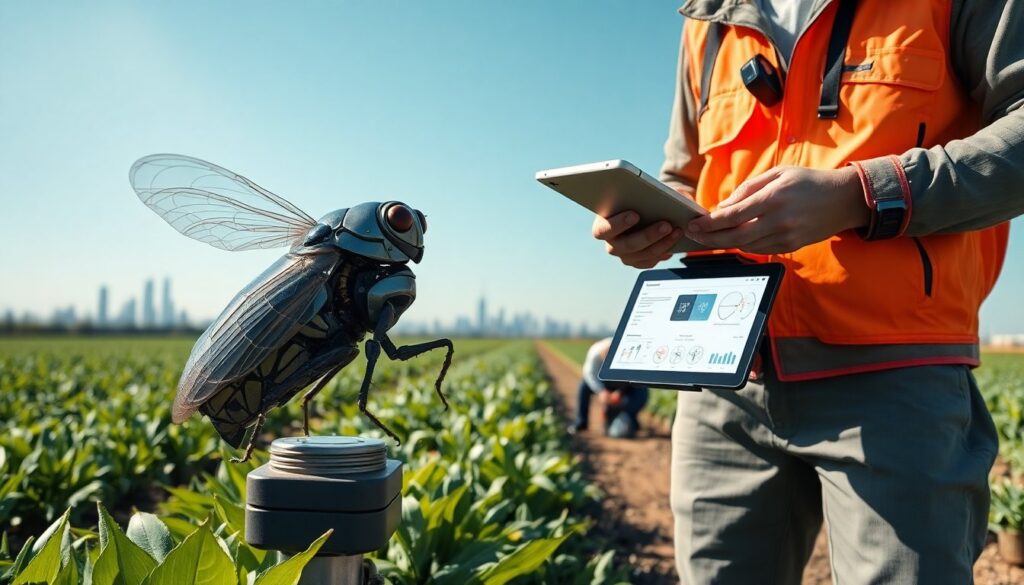
The photon silconsideirion cicada arrived in 2024 as a lab prototype. It uses a conductive shell to capture sunlight and ambient photons. Researchers released study data in 2025 and field teams tracked spread in 2026. The species acts like a living solar panel. It supplies local grids and supports plant communities with excess energy.
Key Takeaways
- The photon silconsideirion cicada is a bio-mechanical organism designed to capture sunlight and ambient photons using a silicon-siderion alloy shell, acting as a living solar panel.
- Its photon-harvesting shell converts light into energy with over 22% efficiency and stores charge in microcapacitors, supporting local grids and off-grid devices.
- This species supports ecosystems by pollinating plants and powering soil sensors that optimize irrigation and environmental monitoring in smart agriculture.
- Deployment of the cicada aids renewable energy efforts by supplementing microgrids, charging IoT devices, and reducing blackout events in rural and urban areas.
- Ethical and regulatory frameworks govern its use, emphasizing traceability, kill-switches, and community consultations to ensure responsible deployment and environmental safety.
What Is The Photon SilconSideIrion Cicada? Origins, Design, And Key Features
The photon silconsideirion cicada started as a lab project at a materials institute. Engineers combined insect morphology with thin-film energy harvesters. The design uses a segmented exoskeleton with embedded silicon-siderion veins. The shell follows cicada wing shapes to maximize surface area. Key features include passive photon capture, onboard microstorage, and a low-energy metabolic interface. The insect weighs 4–7 grams and measures 3–4 centimeters. Field models use a polymer hinge to protect sensors. Researchers released prototypes for controlled field trials in 2025. Field teams reported predictable movement patterns and daytime energy output. The species shows modular repair traits. It molts like a natural cicada but retains the conductive shell. Technicians program flight corridors for energy routing. Regulators classify it as a bio‑mechanical organism. The organism acts as both pollinator and micro-generator in study zones.
How The Photon‑Harvesting Shell Works
The photon silconsideirion cicada captures light with a multi-layer shell. Layers convert photons to charge and store that charge in microcapacitors. The system uses directional facets to reduce reflection losses. It routes current to a dorsal reservoir and to symbiotic root-tether units. The shell self-cleans with micro-oscillations during flight. Engineers tuned the shell to work across visible and near-infrared bands. The design balances weight and conversion efficiency. The cicada sheds minimal waste heat because the conversion uses low-resistance pathways. Technicians monitor output via short-range telemetry. The insect delivers power in pulses when it lands on conductive nodes. It can deliver energy directly to soil sensors or to small off-grid devices. The shell adapts to light intensity by shifting microvalve states in the exoskeleton.
Silicon‑Siderion Alloy: Material Properties And Photon Conversion (Technical Breakdown)
The silicon-siderion alloy forms the conductive layer that converts photons. Scientists alloyed silicon with siderion to increase carrier mobility and corrosion resistance. The alloy uses dopants to create p-n junctions across thin sheets. These junctions produce voltage when photons excite electrons. The sheets reach 22–24% lab conversion under controlled light. The alloy resists humidity and salt with a protective oxide film. The film uses nanopores to enable gas exchange while blocking ions. The material endures temperature swings from 0–45°C without fracture. Researchers validated lifecycle performance through accelerated aging tests. They also tested mechanical fatigue in wing flex. The alloy retains conductivity after thousands of cycles. Repair protocols allow field technicians to replace panels quickly. The material choices keep weight low and efficiency high for flight-capable harvesters.
Ecological Roles And Environmental Impact
The photon silconsideirion cicada influences pollination and microclimate dynamics. It pollinates low-lying flowers while it lands to offload energy. It also powers soil sensors that inform irrigation systems. Early trials show increased seed set in test plots where the cicada operates. The species competes with native insects for nectar but limits that effect by foraging at different times. It reduces local acoustic noise because its motor hum is lower than large agricultural machinery. The organism changes soil microbiomes near its roost sites by altering local energy and moisture cycles. Field teams monitor biodiversity to track unintended effects. Regulators require impact assessments before large releases. Communities reported fewer blackout events where the cicada supplied microgrids.
Practical Applications: From Renewable Power To Smart Agriculture
Farmers deploy photon silconsideirion cicada swarms to power field sensors and small pumps. The cicada delivers targeted energy to irrigation controllers at dawn. It can charge soil probes that log moisture and nutrient data. Urban planners use the species to supplement street sensors and emergency beacons. Conservationists place cicadas near reforestation sites to power seed-dispersal devices. Energy companies test captive swarms to reduce load on microgrids during peak sun. The insects work well with low-power IoT devices and low-voltage storage. They also support off-grid villages by charging medical sensors and lights. Deployment teams schedule releases by season and sun angle to maximize output. Operators combine the cicada with fixed solar arrays to smooth supply.
Ethical, Regulatory, And Deployment Considerations For A Bio‑Mechanical Species
Stakeholders debate ethics for the photon silconsideirion cicada. Bioethicists ask if engineers must limit reproduction and autonomy. Regulators require traceable identifiers and kill-switch mechanisms in firmware. Deployment teams run community consultations before release. They follow containment and recall protocols during tests. Patent holders share firmware standards to allow audits. The species triggers rules for hybrid organisms in several states. Policy makers compare these rules to past AI regulation and automated systems. Some adoption proponents point to sports and event tech that used AI line-calling in 2025 as precedent for machine-assisted decisions, citing a related Wimbledon AI report. Licensing frameworks now include environmental bonds and monitoring requirements. Teams recommend phased deployment and public dashboards to report impacts and outputs.

